
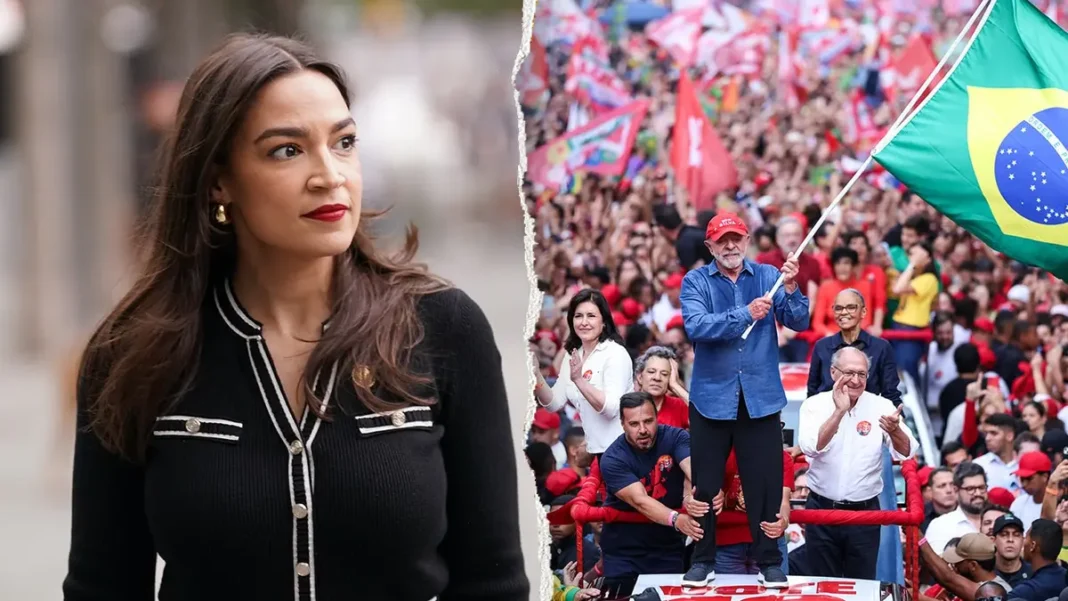
Brazil’s presidential election has triggered a fierce political debate far beyond its borders. While prominent American progressives are celebrating President Luiz Inácio Lula da Silva’s return to power, critics are questioning a controversial last-minute decision that extended voting hours and added another layer of uncertainty to an already divisive election.
The result has become a flashpoint in the wider global struggle between left-wing and conservative political movements. But the controversy surrounding the voting extension is raising a bigger question: Did Brazil’s election authorities make the right call, and will the decision face a serious legal challenge?
A Last-Minute Decision Puts Brazil’s Election Process Under Scrutiny
The dispute centers on a two-hour extension of voting hours requested by Lula, who cited disruptions to public transportation. Less than 30 minutes before polls were scheduled to close, Supreme Court Justice Christiano Zanin approved the extension nationwide.
The decision drew immediate criticism from Lula’s opponent, Flávio Bolsonaro, who argued that changing the rules so close to the end of voting was unacceptable. He also highlighted Zanin’s previous connection to Lula, having served as the president’s lawyer.
There is an important detail in the dispute: Bolsonaro’s campaign also requested an extension, citing heavy rain. That complicates the argument over whether the decision unfairly benefited one side.
Some Brazilian legal experts have suggested that the weather and transportation disruptions could provide grounds for a legal challenge. Others have questioned whether such a challenge would ultimately succeed.
For now, the extension remains a central point of contention, but the allegations do not by themselves establish that the election result was fraudulent.
American Progressives Celebrate Lula’s Political Comeback
As the controversy unfolds, prominent U.S. progressives have welcomed Lula’s victory, portraying it as a rejection of authoritarian politics and a win for democracy.
Rep. Alexandria Ocasio-Cortez congratulated Lula and Brazil, saying the election demonstrated that the will of the people could overcome attempts to suppress it. Sen. Bernie Sanders praised Lula’s record on workers and democracy, while Rep. Ro Khanna described the result as a setback for extremism.
The Democratic Socialists of America also issued a statement celebrating the victory of Lula and his coalition of progressive and left-wing parties.
For conservatives watching the developments, the celebrations highlight how closely some American political figures identify with movements abroad. Critics have questioned whether the same voices would respond as favorably if a conservative candidate benefited from a comparable election decision.
That argument is now part of the political debate surrounding Brazil’s vote, although it does not resolve the factual questions about how the extension affected the result.
Why the Election Matters to Trump and Conservatives
Flávio Bolsonaro campaigned on promises that included tougher public-security policies, expanded prison capacity and a smaller government. Supporters saw those proposals as reflecting priorities similar to those championed by President Donald Trump and other right-leaning leaders.
Lula, by contrast, emphasized anti-poverty programs, higher minimum wages and expanded assistance for lower-income families. His platform attracted support from progressive organizations in Brazil and the United States.
Lula’s victory therefore carries significance beyond Brazilian politics. It offers American progressives a prominent international example of a left-wing leader winning another term, while conservatives see the outcome as a setback for a political ally.
Will the Voting Extension Lead to a Legal Challenge?
The central question is whether the late change to voting hours materially affected the election or violated electoral rules. Some legal experts have identified possible grounds for a challenge, while others doubt that a case would succeed.
Determining the issue requires evidence about the voting extension, the transportation disruptions and their actual impact on voters. Political criticism alone cannot establish that the result should be overturned.
Brazil’s election has already exposed deep divisions within the country and intensified debate among political movements in the United States. With Lula celebrating victory and Bolsonaro’s camp questioning the process, the controversy is likely to remain part of the wider argument over democracy, judicial authority and election rules.
The outcome is clear, but the political fight over how Brazil reached it is far from over.