
A New Poll Reveals the Election Concerns That Could Shape November
With the 2026 midterm elections approaching, a major question hangs over American democracy: Do voters trust the system that decides who governs the country?
Recent polling suggests the answer is complicated. Many Americans expect their local elections to be administered properly, but confidence becomes less uniform when voters are asked about mail-in ballots, election security and whether political leaders will accept an unfavorable result.
A Pew Research Center survey conducted in late September and early October found that 87% of registered voters expected elections in their communities to be run and administered well. Yet confidence that mail-in ballots would be counted as voters intended was considerably lower, at just 53%.
Those numbers reveal a striking divide: Americans can have confidence in election workers overall while still questioning specific parts of the voting process.
Mail-In Voting Remains a Major Point of Concern
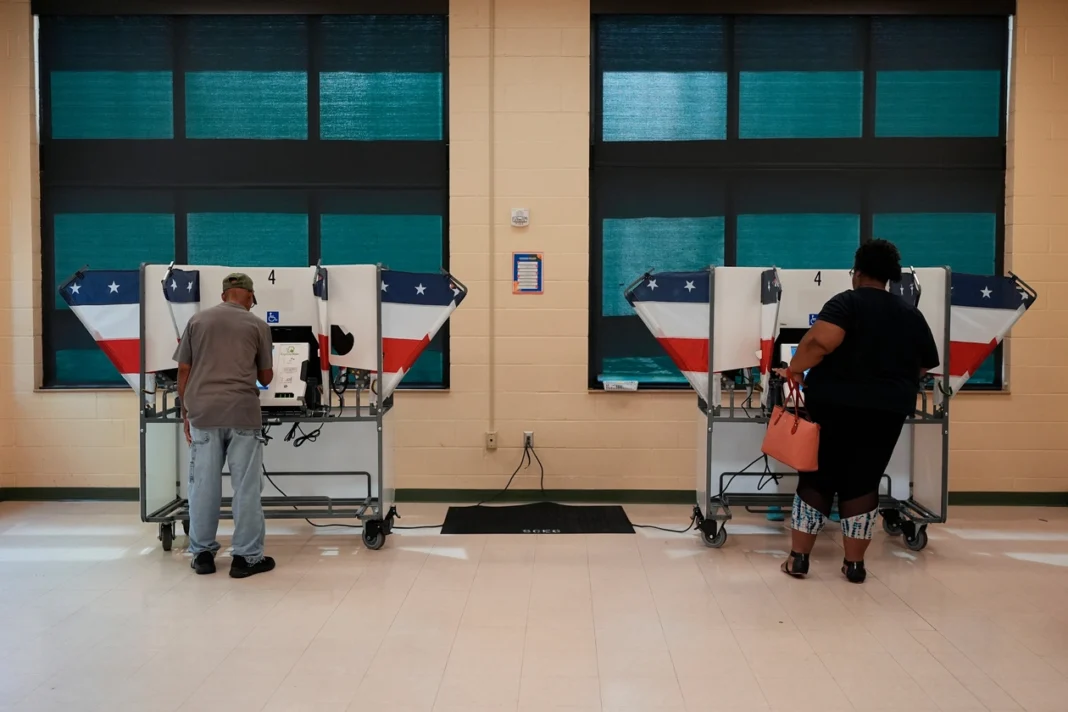
The poll found a substantial difference between confidence in in-person voting and confidence in mail-in ballots.
About 79% of registered voters expressed confidence that in-person votes would be counted as intended. For absentee and mail-in ballots, that figure fell to 53%.
The partisan divide was also clear. Among supporters of Republican congressional candidates, 42% expressed confidence in the counting of mail ballots, compared with 64% of supporters of Democratic candidates.
These findings do not establish that mail ballots are being counted incorrectly. They show that public confidence in the process differs depending on how people vote and which party they support.
Election Security and Voter Access Are Both on Voters’ Minds
The survey also found that Americans have different concerns about election integrity.
Republican candidate supporters were less confident than Democratic candidate supporters that noncitizens who attempted to vote would be stopped. Meanwhile, Republican supporters expressed greater confidence that eligible voters would be able to cast their ballots if they wanted to.
These contrasting views highlight two questions at the center of the election debate: how to prevent ineligible voting and how to ensure that every eligible American can participate.
Both issues matter to the credibility of an election, and confidence depends on voters believing that the rules are enforced fairly.
Will Political Leaders Accept the Results?
Confidence in election administration is only part of the story. Americans also want to know whether political leaders will respect the outcome.
A separate Washington Post-ABC News-Ipsos poll found that 60% of Americans expected the 2026 elections to be fair, and 65% were confident votes would be counted accurately. However, seven in ten doubted President Donald Trump would accept the results if Republicans lost.
That concern varied sharply by party: 36% of Republicans expressed doubt, compared with 77% of independents and 94% of Democrats.
The findings measure public expectations, not what Trump will actually do after the election. But they show that confidence in the electoral process and confidence in political leaders are two different things.
Why Election Confidence Matters in 2026
Election trust affects more than campaign rhetoric. It shapes whether voters accept results, whether losing candidates concede and whether the public believes government has a legitimate mandate.
The polling does not show that Americans have broadly abandoned confidence in elections. Instead, it reveals a more complicated picture: many expect elections to be administered properly, while concerns remain about particular voting methods, election security and political behavior.
The real test this November will be whether election officials can deliver a transparent, accurate process and whether political leaders respect the results, even when the outcome is not what they wanted.