
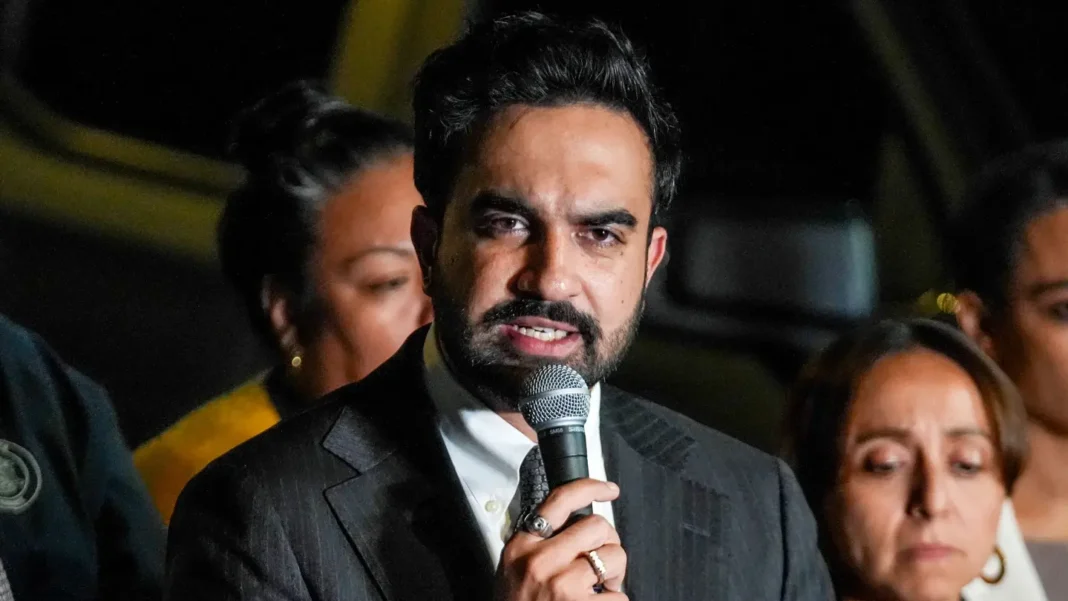
NYC Mayor Accuses Federal Immigration Agents of Acting Above the Law
New York City Mayor Zohran Mamdani is escalating his confrontation with federal immigration authorities after an ICE agent shot 28-year-old Oscar Belgal during an attempted arrest in Manhattan. In a televised interview, Mamdani called ICE a “rogue agency” and accused its officers of treating the law as “merely a suggestion.” The incident has intensified an already bitter clash between New York’s sanctuary-city leadership and the Trump administration over immigration enforcement, public safety and the limits of federal authority. But with federal officials firmly defending their agents, the dispute is rapidly becoming a larger battle over who gets to enforce immigration law in America’s biggest city.
Seven Shots Fired During an ICE Arrest
The October 8 incident occurred in the Marble Hill neighborhood of New York City. Federal immigration officers were attempting to arrest Belgal, a Dominican national whom the Department of Homeland Security says has a criminal history that includes grand larceny and other charges.
According to federal officials, Belgal attempted to flee and struck ICE vehicles during the encounter. An agent fired seven shots, hitting Belgal in the neck. His five-year-old son was reportedly inside the vehicle but was not physically injured.
Mamdani questioned the officers’ tactics and said their plainclothes appearance made it difficult for bystanders to identify them as law enforcement. He argued that the incident raised serious concerns about the use of force and accountability.
The circumstances surrounding the shooting remain under scrutiny, and the competing accounts of the encounter have become central to the growing controversy.
Trump Administration Fires Back at Mamdani
Federal officials have rejected the mayor’s characterization of ICE, arguing that agents are enforcing federal immigration law and pursuing individuals they consider criminal threats.
A Department of Homeland Security spokesperson accused Mamdani of demonizing law enforcement and argued that New York’s sanctuary policies make immigration arrests more difficult and potentially more dangerous.
The administration’s position is straightforward: immigration laws remain federal law, and local political opposition does not eliminate the government’s authority to enforce them.
That puts Mamdani and the Trump administration on a collision course over a fundamental question: Can a city limit cooperation with federal immigration authorities without undermining enforcement efforts?
Mamdani Wants ICE Out of New York
The mayor has repeatedly called ICE a “rogue agency” and advocated abolishing it. Following the shooting, he renewed his criticism and called for federal immigration operations in New York City to end.
Mamdani also announced plans for a city investigation into the incident, including questions about the officers’ conduct and the circumstances surrounding the operation.
His position reflects a broader divide between progressive officials who want to sharply restrict immigration enforcement and federal authorities who argue that such restrictions can allow people accused of serious crimes to remain in American communities.
The dispute also puts local police leadership under pressure, as critics question how the NYPD should respond when federal immigration operations trigger public outrage.
The Bigger Fight: Public Safety, Immigration and Federal Authority
The New York shooting has become more than a dispute over one arrest. It highlights the widening divide between the Trump administration’s immigration-enforcement agenda and sanctuary-city policies promoted by Democratic leaders.
For federal officials, the priority is enforcing immigration law and apprehending people they say pose public-safety risks. For Mamdani, the central concerns are the use of force, accountability and the impact of federal operations on New York residents.
Those competing arguments now collide as investigators examine the shooting and political pressure grows on both sides.
The question facing New York is bigger than whether Mamdani and ICE can agree. It is whether federal immigration enforcement and local demands for accountability can coexist when both sides insist the other is putting public safety at risk.